Structural analysis & design
Analysis, design and code verification on real buildings and structures, with calculation documentation that can be re-run.

Computational structural engineering
One method: model the physics correctly, validate it against evidence, automate the path from analysis to decision. We work the seam where a model becomes a calculation, a calculation becomes a verdict, and a verdict gets signed.
From the track record
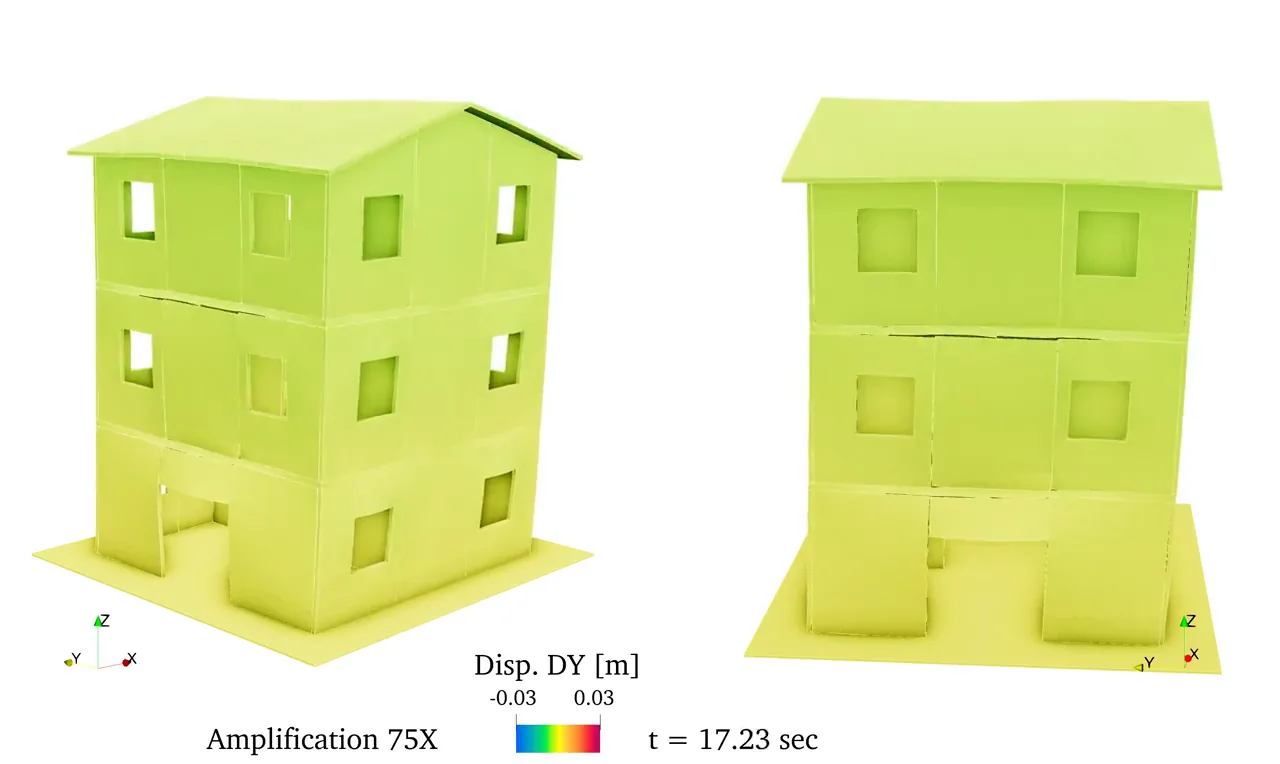
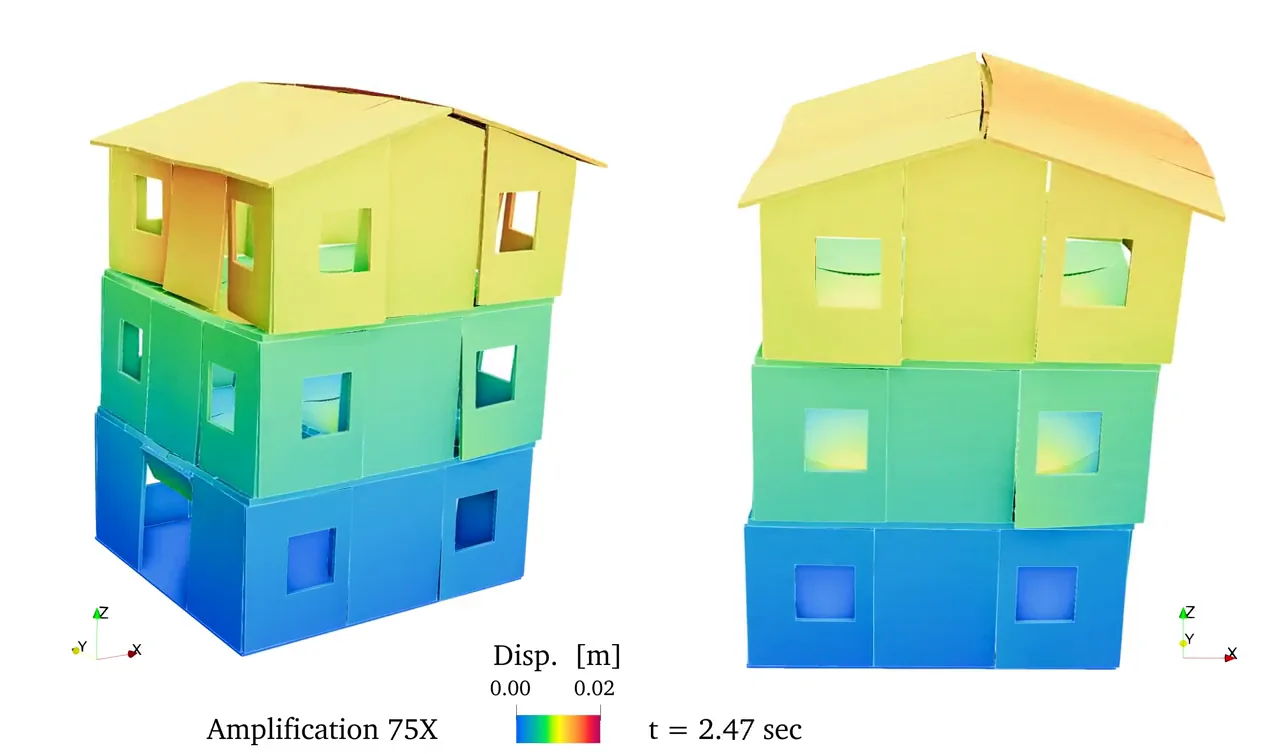
The nonlinear dynamic response under the unscaled Kobe record (PGA=0.82 g), displacements amplified 75 times.
Aether Engineering, from the talk at the code_aster and salome_meca User Day, 30 March 2026.
The human–machine seam
The engineer owns
Whether the model describes the real structure: the loads, the members, the force-state, the boundary conditions. Whether the assumptions still hold for this building.
No solver and no checking tool verifies this step.
The machine owns
Once the model is stated: the solve, the load combinations, the code checks, the numbers in the report. Every one traceable back to the member it came from, and re-runnable by someone else.
Where a check does not apply, it refuses by name.
Why the boundary matters
Model a fixed-fixed beam as simply supported and the check returns a clean pass. Every figure in the report is correct, repeats exactly and traces back to its member. The answer is still wrong, because the model underneath it is.
Both a solver and a code-checking tool check the model they are given. Whether it is the right model is a step with no automated gate, and it stays with the engineer. On every job we say where the automation stops.
What we do
Analysis, design and code verification on real buildings and structures, with calculation documentation that can be re-run.
High-fidelity FEM where the standard assumptions stop being sufficient: contact and friction, coupled loading, structural dynamics and industrial workflows.
Production design software for an industrial client, built, shipped and maintained, and structural IFC taken through to a FEM-ready model.
Joint research with institutes, universities and industry partners on new engineered products and structural systems: the numerical modelling, the analysis of test results and writing the paper.
Track record
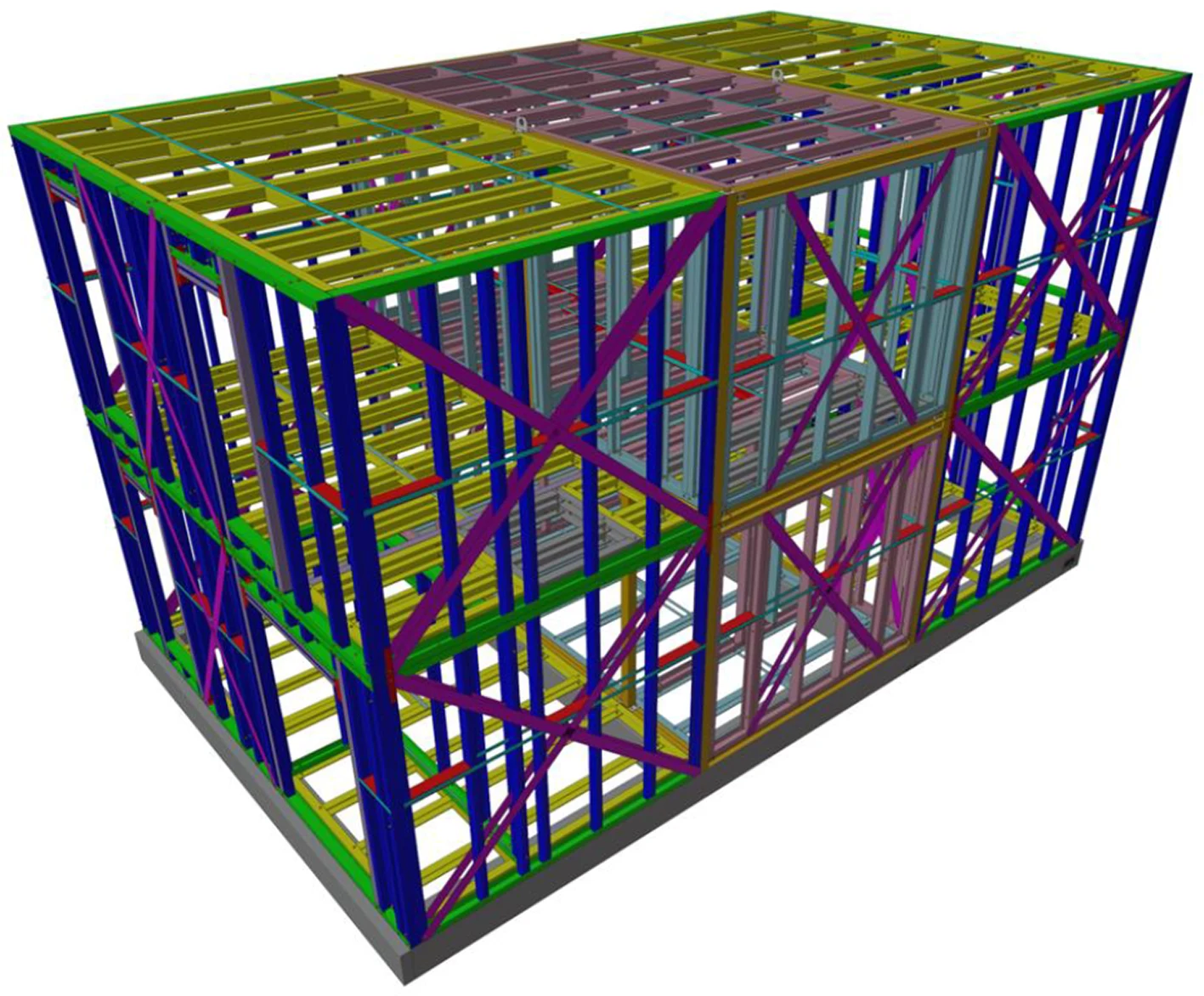
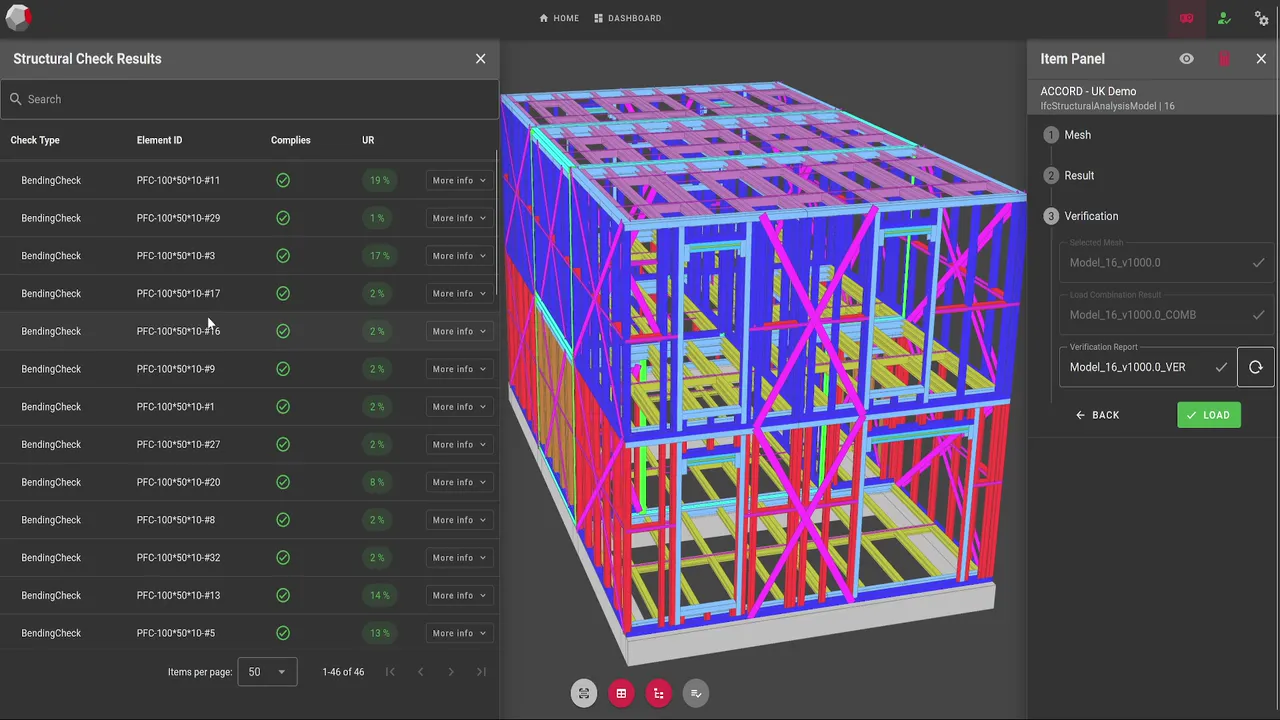
Structural compliance on the UK pilot of a Horizon Europe project: a BIM model goes in, and out comes a report naming which steel members meet Eurocode 3.
The official shear-connector design application for Tecnaria. In production since October 2024.
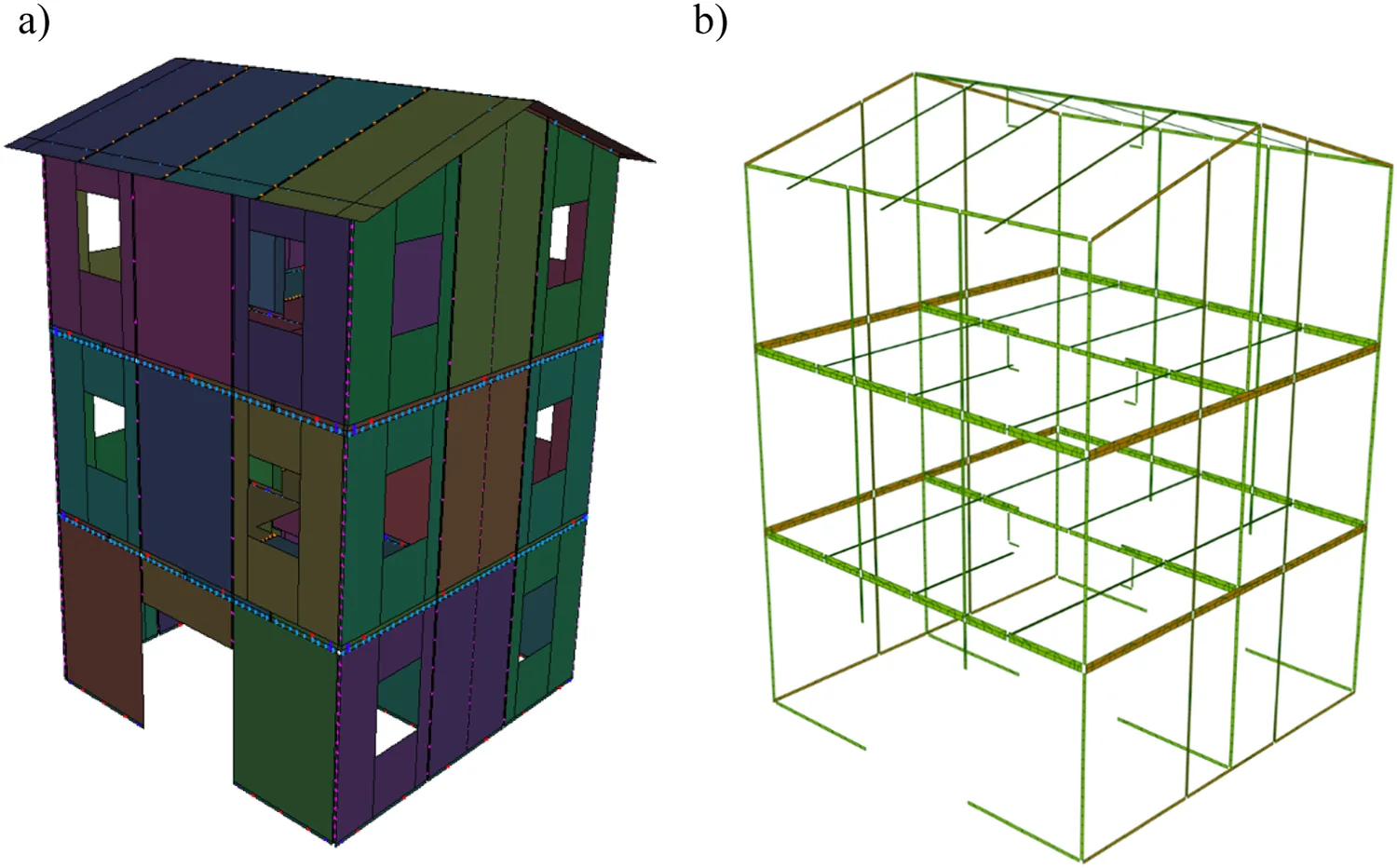
Nonlinear dynamic analysis checked against low-amplitude shake-table data.
Open source
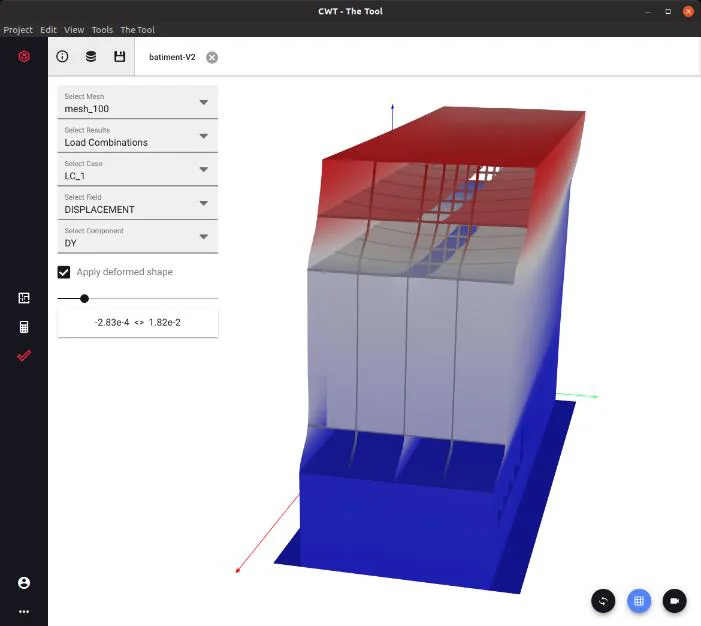
ifc2ca is the open-source pipeline from a structural IFC model to a code_aster analysis, and part of IfcOpenShell. Upgraded for ACCORD¹, it took a whole building from model to analysis: the project's UK pilot, a two-storey modular steel house. ifc2ca on GitHub (opens in a new tab)
¹ This project has received funding from the European Union’s Horizon Europe research and innovation programme under grant agreement no. 101056973. UK Participants in Horizon Europe Project ACCORD are supported by UKRI grant numbers 10040207 (Cardiff University), 10038999 (Birmingham City University) and 10049977 (Building Smart International).
Our papers and proceedings are on the publications page.
A structure the standard assumptions stop describing, a calculation that should become a tool, or a project that needs a structural workflow.